Written by Dave
Matsue to Shimo-Hojo Tottori – Turbine Coastal Day – (83k, 380M)
We enjoyed out mini-break in Matsue and once again enjoyed the Green Rich Hotel. It’s not fancy (as witnessed by the all-in-one toilet photo yesterday) but it is new, clean and very efficient. We killed the brekkie buffet again today but there were more people it wasn’t quite so obvious that we were the ones pigging out. There was a troop of older Aussie ladies on a trip with their Ikebana (flower arranging) teacher. The gal I spoke with was from Pymble, one suburb north of Gordon where we lived for 8 years – small world. They were mostly “stout” gals, making the brekkie blame thing a lot easier for us – haha.
After the really nice bike path ride into Matsue, we didn’t know what to expect. I had fears about a sister city of 150k folks about 10k into the ride that we had to cross. Well, the first 8k getting out of Matsue were pretty busy but getting around the bigger city was mostly nothing. I think this has more to do with time of day than anything. Before 7AM traffic is light, 8AM traffic is busy, by 10AM, it’s died way down. Hard to really know when you cross a city only once on a trip…

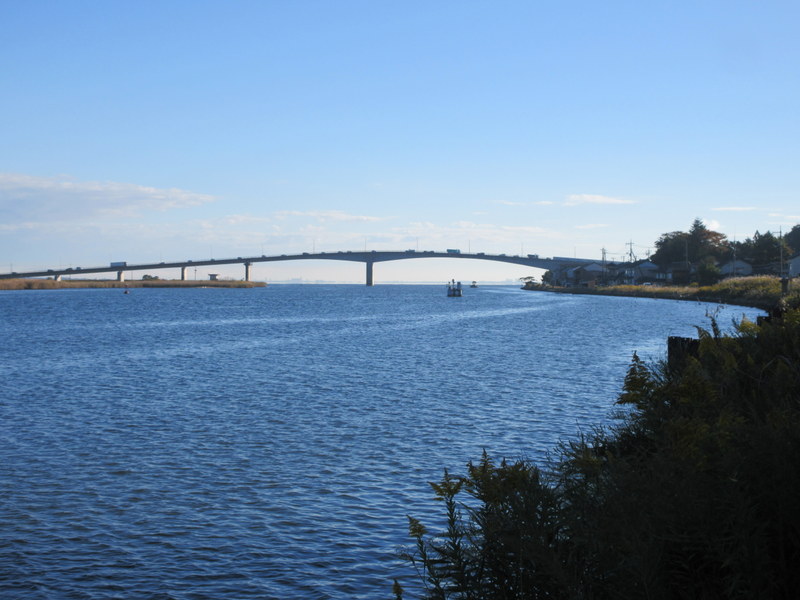
Early on today we spotted a fire hydrant. After writing yesterday that fire hydrants are under manhole covers, we moved into a region where they are mostly above ground. With more reading this afternoon I discovered that it really is a region to region thing. So now I’m not completely sure what the story in Tokyo is. Most of my business trips there I didn’t notice fire hydrants, but I’m not sure if I was simply inattentive or they put them under manholes. Further research is required.

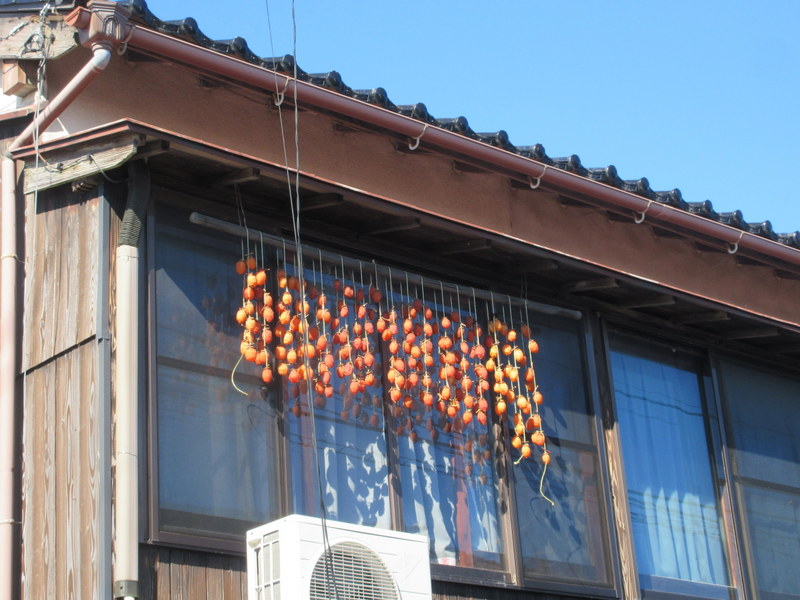
A few days back we started noticing persimmon fruits on strings hanging over doors and windows of homes. We’d seen a lot of trees loaded with fruit but not many folks picking them. Most of the leaves have fallen off the trees and the fruit looks almost abandoned. I guess they have to let it stay on long enough to ripen. They string them up to preserve them but they are also used in festivals and are a sign of good luck and longevity. Who knew?
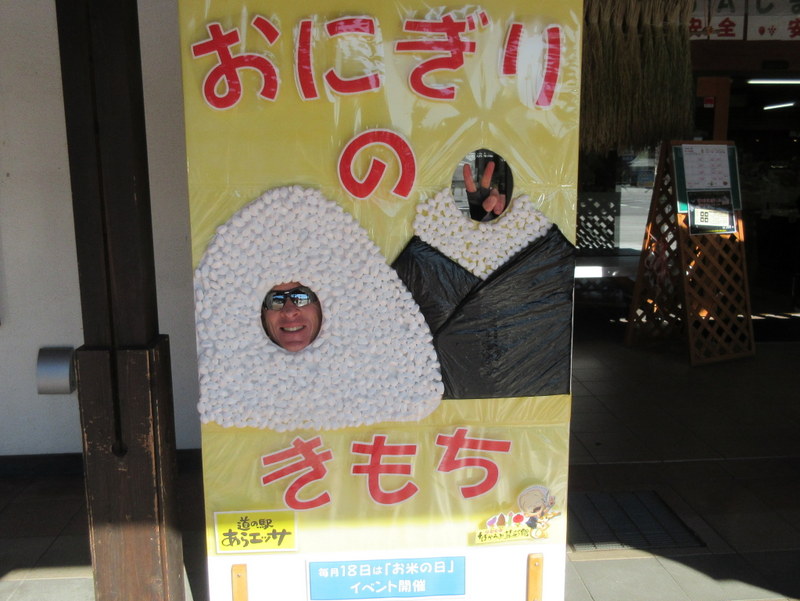
Once we left city roads, we had nice riding out mostly along the Sea of Japan. Today we asked Komoot to give us a route using “road riding” instead of “bike touring” as it’s routing method. The route ended up having much less climbing and for the most part we had quiet back roads. We stopped for morning tea at a michi-no-eki where Nancy snapped me turning into a 1-2-3 onigiri. I think we may have reached peak Japanese on this trip, I’m turning into Japanese food.
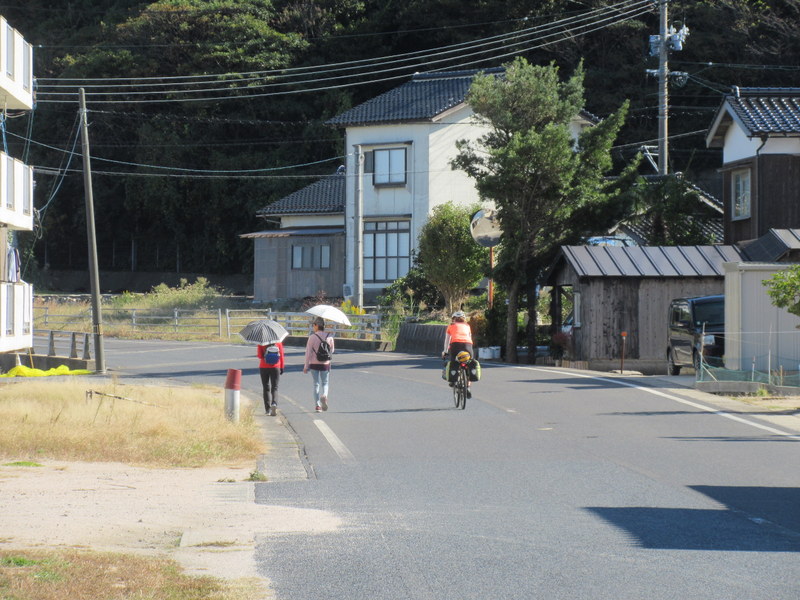
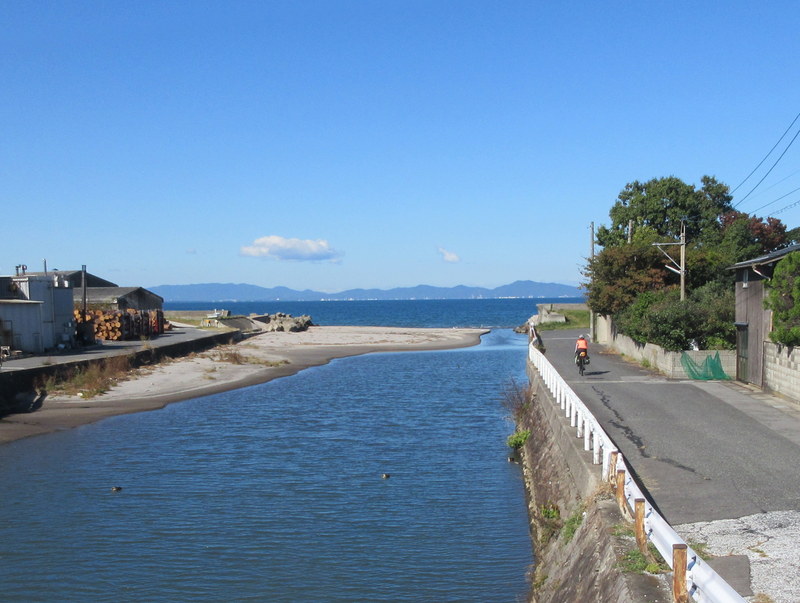
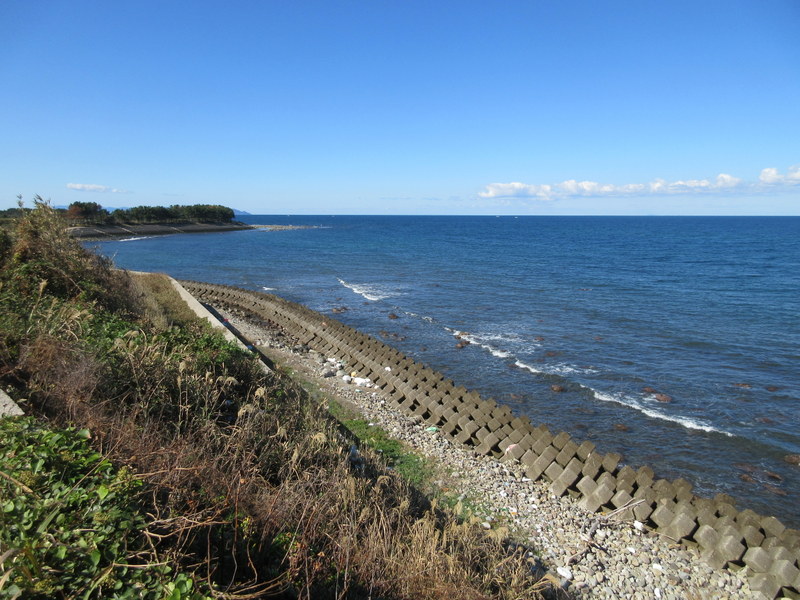
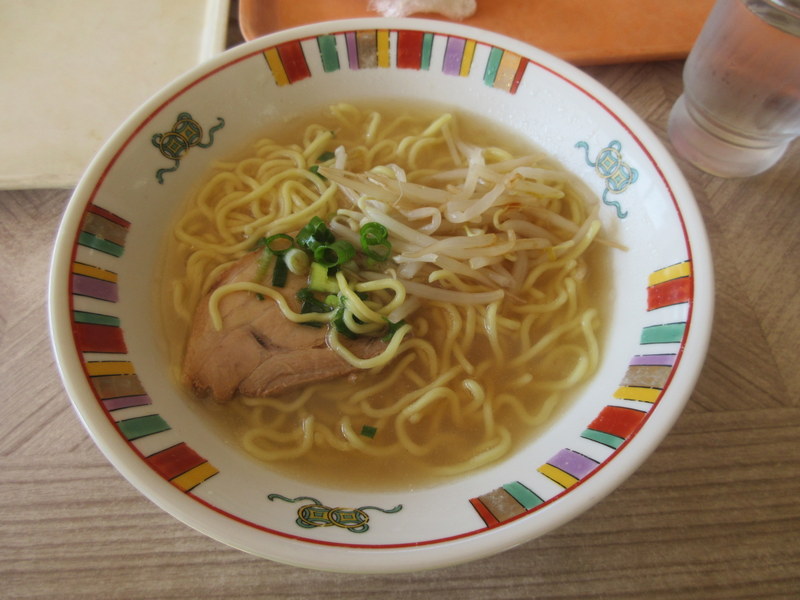
With the quiet roads and tailwinds, we kind of just cruised along, not really watching the time. Nancy commented that we’d probably not find anything to eat being out on the back roads but right about noon when we were starting to feel a bit peckish, we came across a funky cafeteria-like restaurant. They had a bunch of food on trays you could take, or if you wanted you could order things. We had a ramen each, some gyoza and dumplings all for the princely price of $10USD. It was clearly the retired communities “value for money” lunch spot and we clearly brought the average down by a good few years.

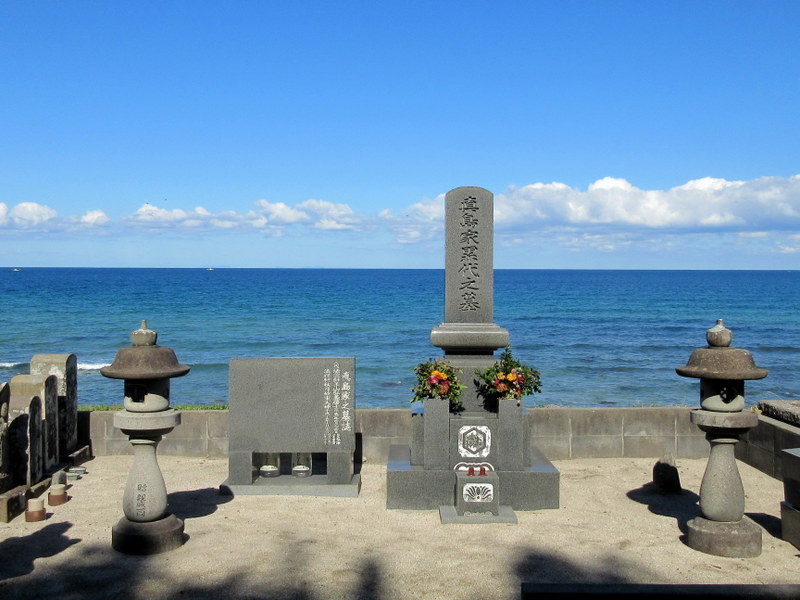
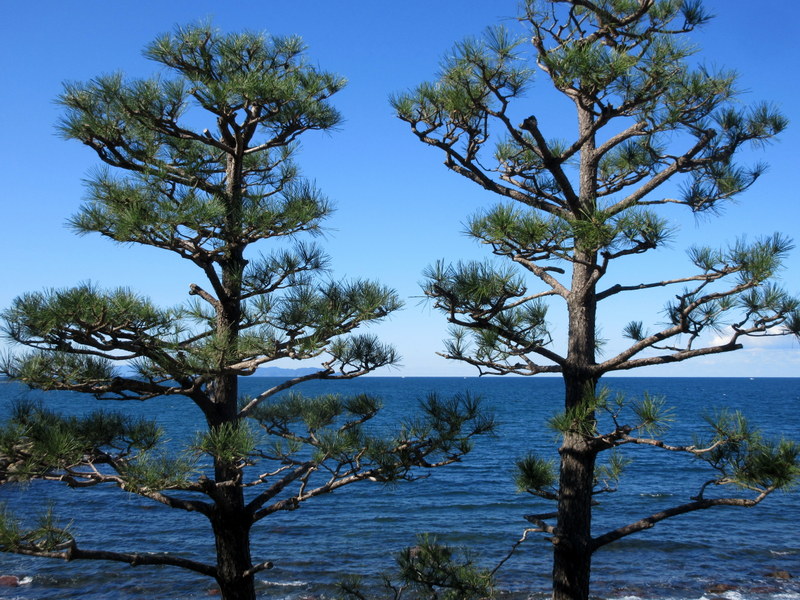
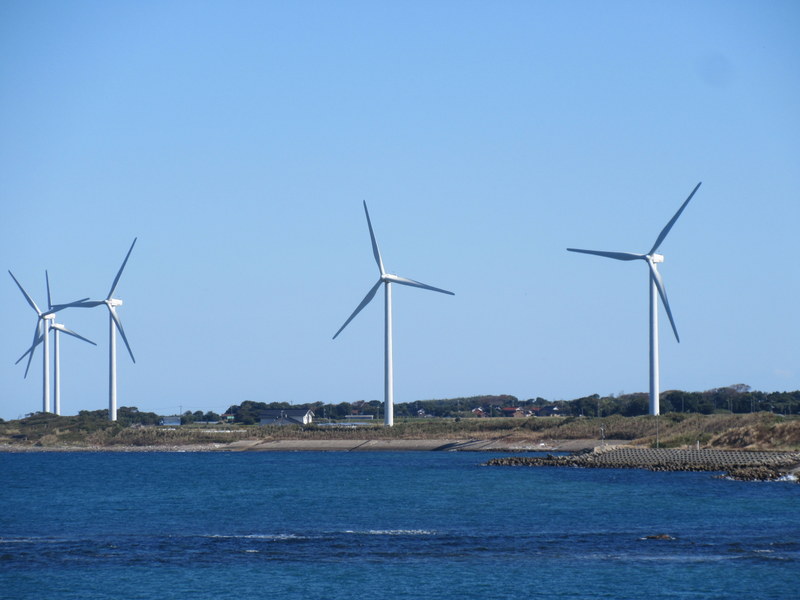
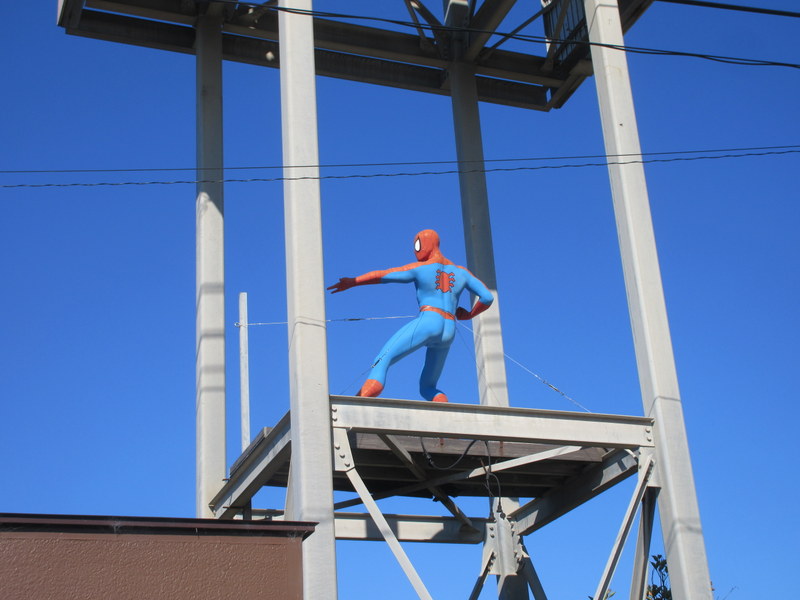
Japan was making good use of the tailwind today, as were we. We saw several batches of wind turbines, all spinning. I didn’t really notice until I uploaded my photos that I had taken quite a few photos of them, plus a good number of the sea. Turbines always make me feel nice, except the other day when the paraglider was flying close to one!
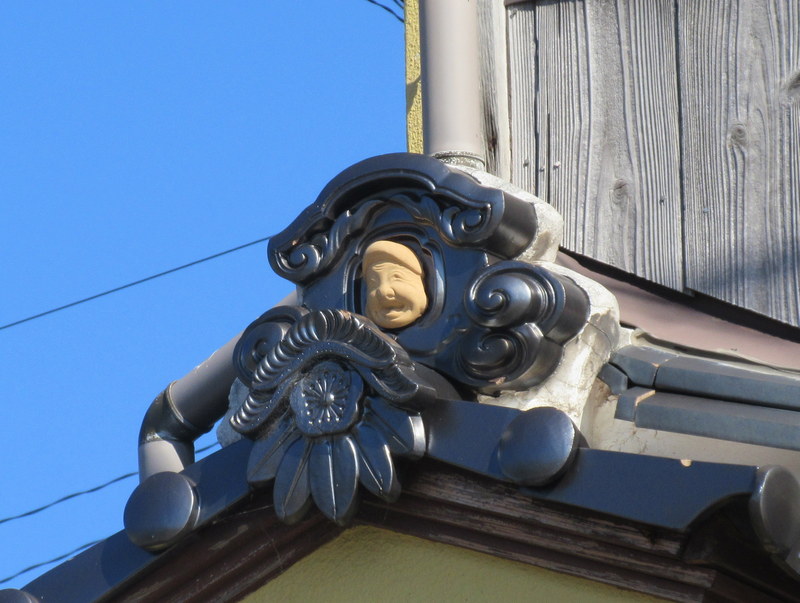
Japanese roofs have been fascinating for us on this trip. They are mostly tile and many have ornate tips or corners. In this part of Japan, they have a funny little fisherman-looking icon in the corners as well. I noticed it first thing this morning, later giving Nancy the head’s up. It’s quiet funny as once you see “him” it’s kind of hard not to stare at every one and smile. I don’t know if Nancy was happy I pointed them out or not as they had her attention for a good few k’s afterwards. We can’t find much about them on our slow internet right now.

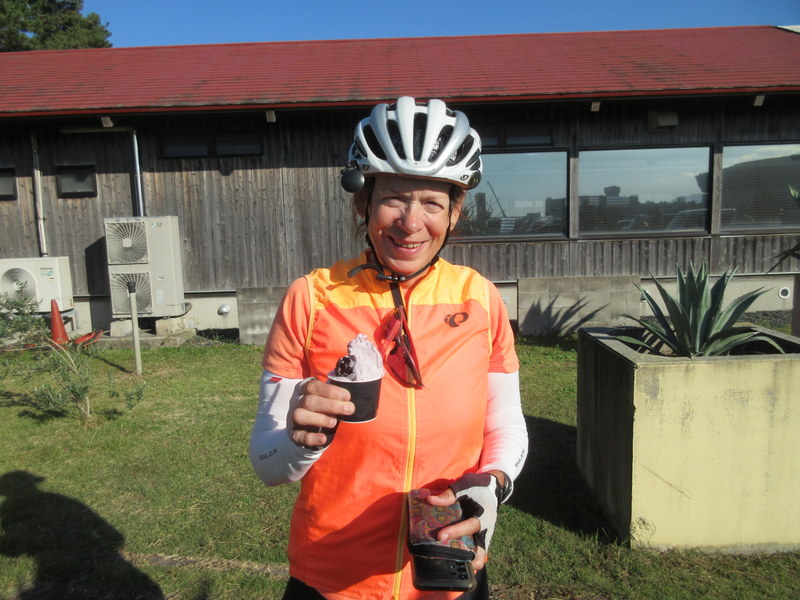
Other than the first 8k (traffic) and the last 5k (road construction) we had a very nice ride today. The last 5k were all a bit messy and made us a little grumpy coming into camp. As luck would have it, the auto camp area where we are staying has a gelato shop – spirits were soon restored.
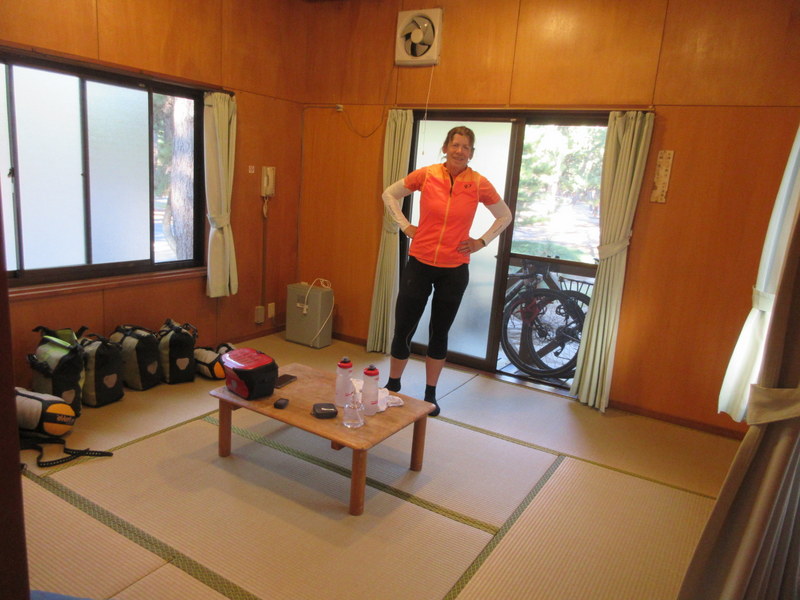
Even though we are in an auto camp we are not staying in our tent. We missed out on a bungalow after the big rain day a few weeks back so tonight we have treated ourselves to a “make-up” bungalow. It’s basically one tatami room with a fridge, microwave and kettle out in a little enclosed porch area. We have to use our own sleeping bag but it’s dry so there will be no issue with a wet tent. The auto camp is massive and I think there are about 6 guests, Nancy and I being 2, in total staying here tonight. They have a long list of rules and there won’t be a troop of Aussie gals to blame anything on so tonight, we’ll be on our best behavior.

Tomorrow we leave the Sea of Japan and cut south across Honshu. It will take us a couple days to reach the other side. Tomorrow we ride over the shoulder of Mt Daisen. It looks like one big climb for the first 40k, followed by 30ks of downhill. I hope Komoot roads are the smaller ones and we have a shot at seeing more monkeys. At least we will have the mountain to entertain us for the day while we climb – we’re looking forward to it…
 Leave Without Pay
Once again, beautiful scenery. How fun to meet up with some Aussies. Good luck on seeing some monkeys!
Our roads were too busy for monkeys but still lots to see the next day…
Here’s what Google’s Bard AI told me about the photo of the head:
I did some research, and I found that the carved face roof near Matsue, Japan is actually a part of a shrine called the Matsue Taisha Shrine. This shrine is dedicated to the Shinto god Okuninushi, who is worshipped as the god of marriage, fertility, and business.
The carved face on the roof of the Matsue Taisha Shrine is believed to be a representation of Okuninushi. The face is said to be both benevolent and terrifying, reflecting the dual nature of Okuninushi’s power.
The Matsue Taisha Shrine is a popular tourist destination, and the carved face roof is one of its most iconic features. The roof is said to be over 500 years old, and it is a masterpiece of Japanese craftsmanship.
Wow Mike, thanks for all the research. Though the terrifying part is hard to see. We just laugh at them 🙂